
HomeMentors

Pathway · STEM Mentors · Volunteer Role

Bring real-world STEM thinking into the classroom

Support Year 5/6 students through three structured classroom visits. You will ask questions, help teams think through evidence and share how STEM problems are approached in real life. MyScience provides the briefing, prompts and facilitator support. No teaching experience is required.
Around 8 hours Three classroom visits No teaching qualification required
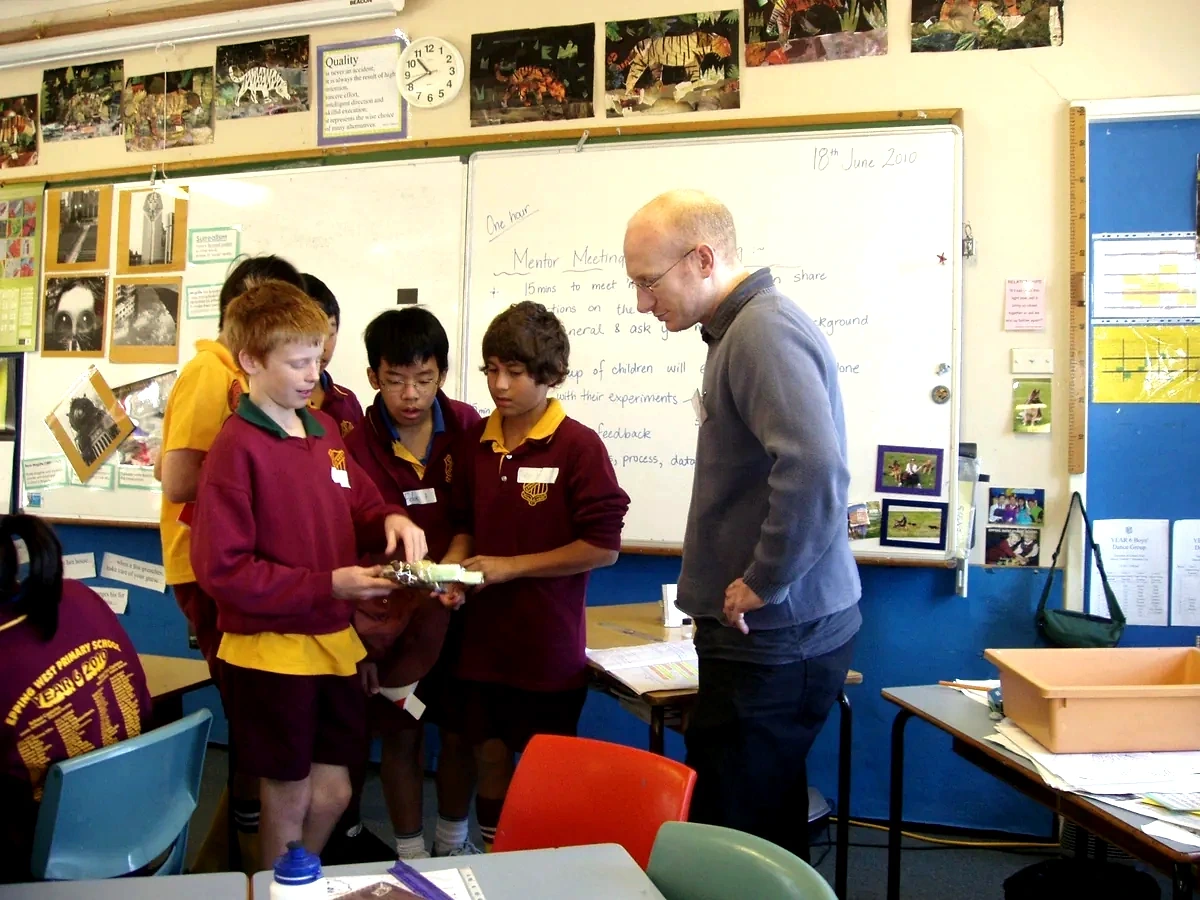
A STEM mentor discussing an investigation with primary students

At a glance

The role, clearly described

The practical details a prospective mentor needs before deciding whether the opportunity is a good fit.

What is this?
A supported volunteer role helping Year 5/6 teams develop, conduct and explain real science investigations.
Who is it for?
People with STEM knowledge gained through work, study, research, industry or practical experience, including professionals, postgraduate students and retirees.
What will I do?
Attend an online briefing, join three classroom visits, ask prompting questions and optionally attend the MyScience Fair.
Time commitment
Approximately eight hours, including orientation and three classroom visits, plus travel time. MyScience Fair attendance is optional.
What is required?
The relevant child-safety clearance and availability for the scheduled classroom visits. MyScience explains the requirements for your location.
What support is provided?
A mentor briefing, session prompts, visit guidance and a Hub facilitator who coordinates the program and visit sequence.
Do I need to be a scientist?
No teaching qualification is required. The role suits people who use STEM knowledge or scientific thinking in many different kinds of work, study and practical settings.

The mentor journey

A defined role across four stages

You receive the context and prompts before entering the classroom, then support the same investigation process as it develops.

Before visits

Mentor briefing

Learn how MyScience works, what students are investigating and how to guide with questions rather than answers.

Classroom visit 1

Meet the teams

Listen to students’ ideas and help them turn broad questions into investigations they can test.

Classroom visits 2 and 3

Text, examine, refine

Help teams consider evidence, respond to unexpected results and strengthen the explanations they are building.

Science Week

MyScience Fair

See students present their investigations to families and the school community, when your availability permits.

The mentoring method

Guide the thinking—without becoming the teacher

The value of the role comes from helping students reason through a problem, not from supplying the correct answer.

What you will do

Ask, prompt and share perspectives

  • Ask socratic questions rather than give students the answer
  • Support students to design specific, testable questions for their investigations.
  • Encourage careful observation, measurement and recording
  • Help teams respond constructively when results are unexpected
  • Share how evidence and uncertainty are handled in real STEM work

What you are not expected to do

No lesson planning or classroom management

  • Teach the whole class or prepare lessons
  • Mark student work or assess performance
  • Manage classroom behaviour alone
  • Know the answer to every scientific question
  • Provide specialist equipment or prepare resources

A manageable commitment

Your commitment. What the experience offers.

Your commitment

Time, clearance and thoughtful communication

  • One mentor briefing before classroom visits begin
  • Three classroom visits on the agreed schedule
  • The child-safety clearance required for your location
  • Travel to the participating school
  • Curiosity, patience and respectful communication

What the experience offers

A structured way to make local STEM impact

  • A low-preparation opportunity to support young scientists
  • Practice explaining STEM ideas to a non-specialist audience
  • Connections with educators, students and other mentors
  • Direct insight into how young people develop scientific thinking
  • Optional participation in the MyScience Fair

Hear from mentors

See what the classroom experience is like

MyScience mentors describe the preparation involved, how they support investigations and the difference thoughtful questions can make.

STEM mentor video

Mentors in their own words

Hear how people from different STEM backgrounds approach the role and support students without needing teaching experience.

Watch video

Mentor perspectives

What participating mentors say

“I was initially reluctant to participate as I am not a ‘scientist’ but you forget how we use this ‘scientific’ knowledge daily at work in agriculture.”
STEM Mentor, Braidwood
“The boys I worked with in our third class thought their experiment was a failure when I illustrated their data collection must have been recorded incorrectly... but the ‘light bulb’ moment came for them with how they would attack the process in the future.”
STEM Mentor, Braidwood
“No experiment is a failure, just one way for it not to work.”
STEM Mentor, Braidwood

Before you commit

Child safety, scheduling and placement

MyScience confirms the practical requirements before you accept a classroom placement.

Before classroom visits

Clear requirements and defined boundaries

  • A valid child-safety clearance is required
  • MyScience advises which clearance applies in your location
  • You receive the briefing, visit sequence and session guidance
  • The school retains responsibility for students and classroom management
  • Location, travel and visit timing are confirmed before placement

What happens after registration?

From expression of interest to a suitable Hub

  1. 1

    MyScience reviews your location, STEM background and availability.

  2. 2

    The team confirms the relevant child-safety requirements.

  3. 3

    You are contacted when a suitable Hub opportunity is available.

  4. 4

    You receive the briefing and visit schedule before confirming participation.

Ready to support the next generation of scientific thinkers?

Register your interest and MyScience will contact you about your location, availability, child-safety requirements and upcoming Hub opportunities.

Register as a STEM mentor

Registration is an expression of interest. Placement depends on Hub location, timing and mentor requirements.